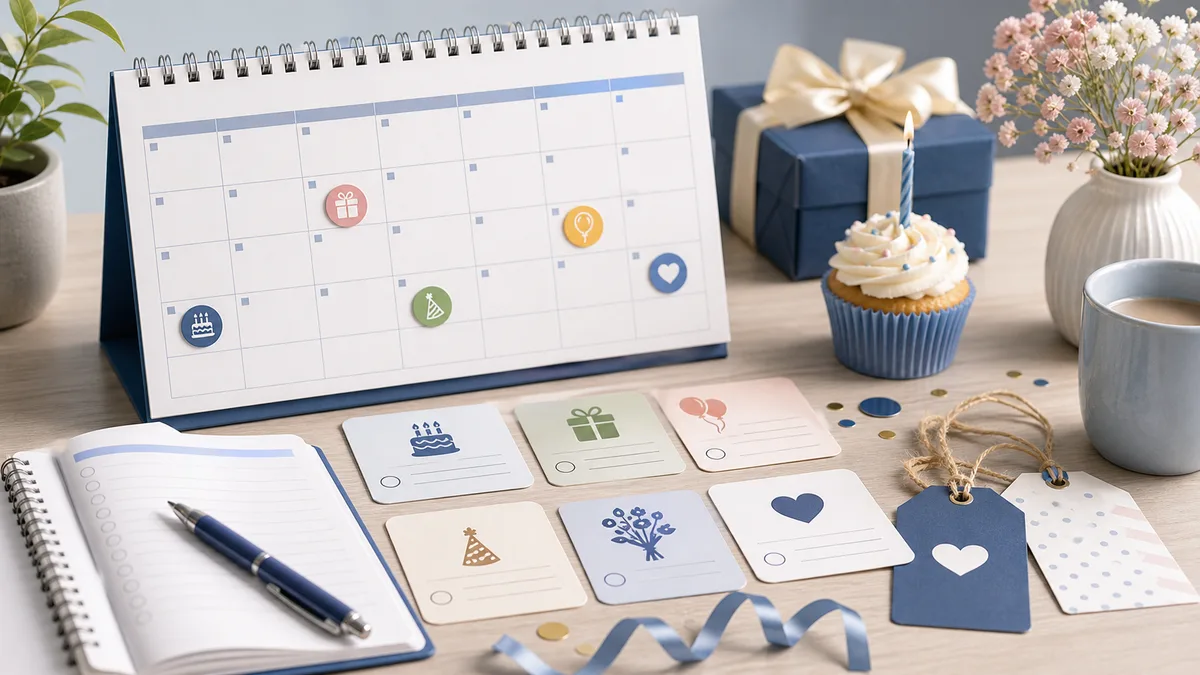
Birthday Calendar Guide, Reminder Dates, Weekdays, and Planning Tips
Build a useful birthday calendar with reminder dates for messages, cards, gifts, calls, and family celebrations.
Age Finder editorial team | 7 min read | Updated 2026-07-14
A birthday calendar is most useful when it helps you act before the birthday arrives. The date itself is only the starting point. A practical planner also records who the birthday belongs to, when preparation should begin, whether a card or gift needs delivery time, and how you want to contact the person.
You can use the Birthday Calendar tool to check the next birthday date, weekday, turning age, and planning windows for one person. For a larger family or team, transfer the confirmed date into a trusted calendar app with recurring reminders. This creates a dependable system without storing everyone's private information on an unfamiliar service.
Check every birth date before saving it, use the person's local timezone for calls or scheduled messages, and keep the birth year private unless turning age is genuinely useful. For February 29 birthdays, decide how you want reminders to behave in non-leap years.
How to build a birthday calendar that is actually useful
Start with a clean list of names and confirmed month-and-day dates. Add the birth year only when you need to calculate the turning age. Then check each date in the Birthday Calendar tool and record the next occurrence, weekday, and any milestone that affects your plan. A weekend birthday may be easier for a visit, while a weekday birthday may call for an earlier family gathering.
Choose one main calendar instead of scattering reminders across notes, messages, and several apps. Most calendar apps support yearly recurrence, multiple alerts, private notes, and shared family calendars. Keep the entry simple enough to scan: the person's name, birthday, preferred contact method, and any preparation note you will genuinely use.
Confirm the month and day with the person or a reliable family record.
Use a yearly recurring event so the reminder continues automatically.
Add the birth year only when turning age or a milestone matters.
Keep gift ideas and personal notes private rather than placing them in a public calendar.
Choose reminder dates based on the action
One reminder is rarely enough for every birthday. The right notice depends on what you plan to do. A same-day notification may work for a quick message, but it is too late for a mailed card, a custom gift, travel, or a group celebration. Work backward from the birthday and give each action enough time.
A useful birthday reminder calendar might alert you one month before an important milestone, two weeks before for gifts or reservations, three days before for a card or call plan, and on the day for the final greeting. You do not need every alert for every person. Use fewer reminders for casual contacts and earlier reminders for close family or events that require coordination.
One month before: milestone plans, travel, custom gifts, or venue bookings.
Two weeks before: order a gift, mail a card, or coordinate with family.
Three days before: write the message and confirm a call or visit.
On the birthday: send the greeting and complete the plan.
Handle leap-day birthdays, timezones, and changing dates
People born on February 29 have a calendar birthday only in leap years. In other years, families may celebrate on February 28 or March 1 according to personal preference, local rules, or tradition. Ask the person which date they prefer instead of assuming. Keep the original February 29 date in your record and add a note about the non-leap-year reminder.
Timezones matter when the person lives abroad. A message scheduled for midnight in your timezone may arrive on the wrong local date. Use the recipient's local timezone for scheduled calls or greetings. Also review imported contacts occasionally because duplicated events, incorrect years, and outdated notes can make an otherwise tidy birthday tracker unreliable.
Keep birthday information private
A full date of birth can be sensitive personal information. For ordinary reminders, the month and day are usually enough. Avoid sharing a calendar publicly when it contains birth years, addresses, phone numbers, travel plans, or gift notes. If a family calendar is shared, give access only to people who need it and review its sharing settings.
Age Finder calculations run in the browser, but your long-term reminder list should still live somewhere you trust. The calculator can verify dates and planning windows; your own calendar remains the place where you control notifications, backups, and access.
A simple birthday planning workflow
Check the date, calculate the next birthday, and decide what action matters for that relationship. Save the recurring event with the right amount of notice. When the first reminder arrives, choose the gift, card, call, or greeting. Near the birthday, use the Birthday Wishes tool for wording and personalize the result before sending it.
This workflow keeps the calendar focused. The planner tells you when to act, the countdown shows how much time remains, and the wishes tool helps with the message. Each tool has a clear job, so the planning process does not become another crowded list you ignore.
Frequently asked questions about Birthday Calendar Guide, Reminder Dates, Weekdays, and Planning Tips
How do I make a birthday calendar?
Confirm each birthday, create a yearly recurring event, and add reminders early enough for the message, card, gift, call, or celebration you plan.
How early should I set a birthday reminder?
Use one to three weeks for gifts or plans and a same-day reminder for the final greeting. Important milestones may need a month or more.
Should a birthday calendar include the birth year?
Only include it when turning age or milestone planning matters. Month and day are enough for most reminders and expose less personal information.
How do I remember birthdays every year?
Use a yearly recurring calendar event with at least one advance reminder, then review the calendar occasionally for incorrect or duplicated entries.
What should I do with a February 29 birthday?
Keep February 29 as the original date and ask whether the person prefers February 28 or March 1 reminders in non-leap years.
Can I share a birthday calendar with family?
Yes, but limit access to trusted people and avoid including sensitive details such as full birth dates, addresses, or private gift notes.
Which timezone should a birthday reminder use?
Use the birthday person's local timezone when scheduling a message or call, especially if you live in different countries.
What is the difference between a birthday calendar and a countdown?
A calendar organizes many dates and reminders. A countdown focuses on the exact time remaining before one upcoming birthday.
Privacy choices
Cookie settings
Age Finder Online uses essential browser storage for theme, consent, and basic site features. Optional analytics help us improve the site, and advertising consent helps support free tools with Google AdSense. If you decline, ads may be limited or less relevant.